Buying Guides · 6 min read · October 2026
How to Read a Supplement Label: Serving Size, %RI and "May Contain"
By The EVΛFIT team. Published 23 October 2026.
Start with the serving size
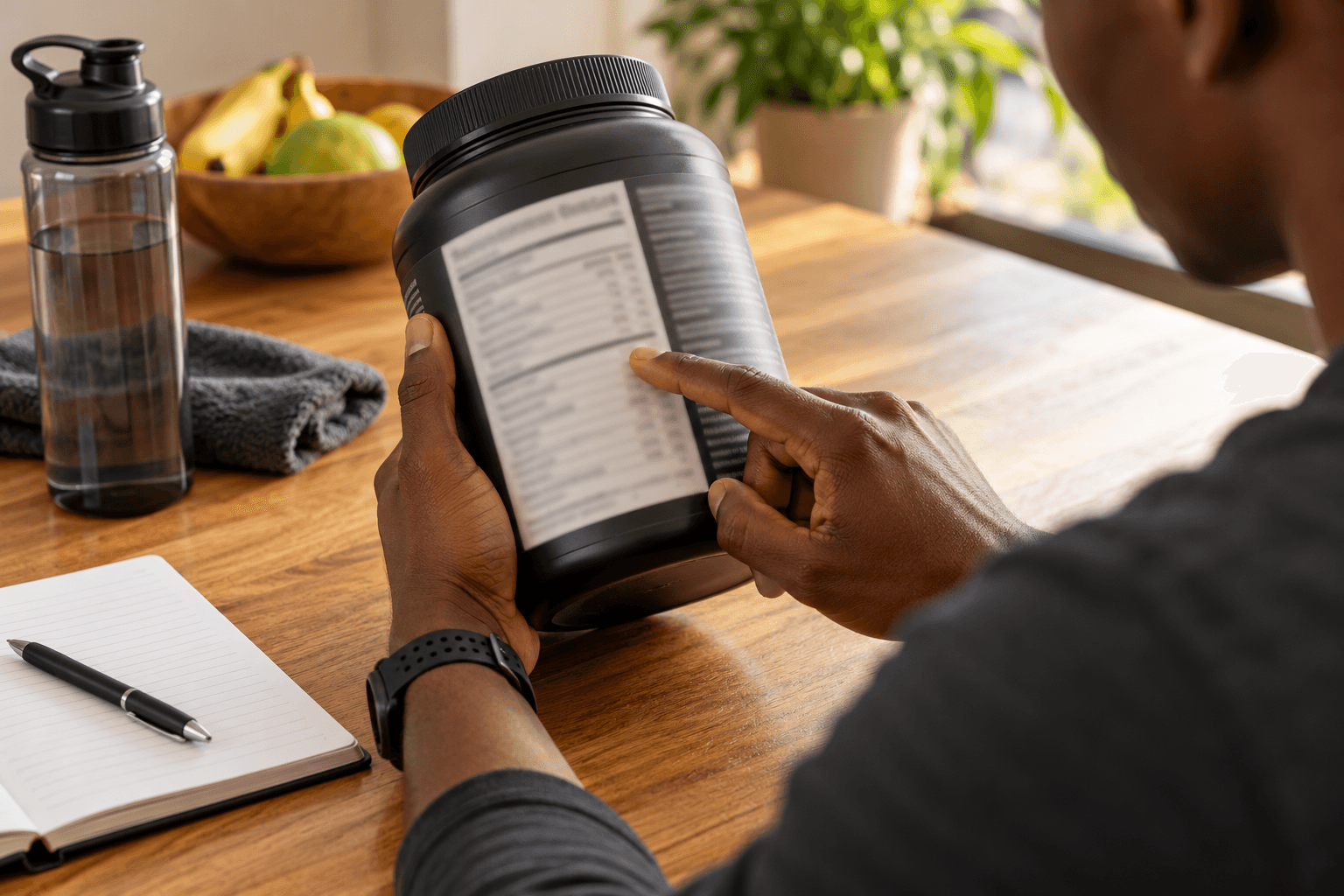
Everything on a label is worked out per serving, so the first thing to read is the serving size and the number of servings in the pack. For example, Optimum Nutrition Gold Standard 100% Isolate (930 g, chocolate) lists a serving of 1 rounded scoop (30 g) and 31 servings per tub.
Per 100 g versus per serving
UK and EU labels list nutrients per 100 g and per serving. Per 100 g lets you compare two different products fairly. Per serving tells you what you actually take. On that same isolate, protein is 83 g per 100 g and 25 g per 30 g serving.
Energy in kJ and kcal
Energy is shown in both kilojoules and kilocalories: 459 kJ / 110 kcal per serving on the isolate above. Calories is the everyday word for kcal.
What %RI means
%RI is the percentage of the reference intake for an average adult (8,400 kJ / 2,000 kcal for energy, and set amounts for vitamins and minerals). It is a reference, not a target, and it can be over 100%. For example, Optimum Nutrition Gold Standard Pre-Workout lists vitamin B12 at 363% RI and thiamin at 187% RI per serving. If you take several supplements, it's worth adding up the vitamins across them.
"Contains" and "may contain"
Allergens such as milk and soy must be shown in bold in the ingredients list. "May contain traces of" is a precautionary statement about cross-contact in the factory, not an ingredient. The isolate above lists milk and soy as ingredients and carries the warning "may contain traces of gluten, egg, nuts, peanuts". If you have an allergy, read both.
Creatine and creatine monohydrate
Some labels list a compound and the active it provides as two lines. Optimum Nutrition Micronised Creatine lists creatine monohydrate 3.4 g and creatine 3.0 g in a 3.6 g scoop, which means 3.4 g of monohydrate supplies 3.0 g of creatine. See our creatine form guide.
Ingredients are listed by weight
Under EU food labelling rules, ingredients are listed in descending order of weight, so what comes first is there in the largest amount.
US labels look different
A US "Supplement Facts" or "Nutrition Facts" panel is laid out differently, with calories and % Daily Value (based on a 2,000-calorie diet) instead of kJ and %RI. Both are valid. Just make sure you compare the same serving size when you compare numbers.
A 30-second routine
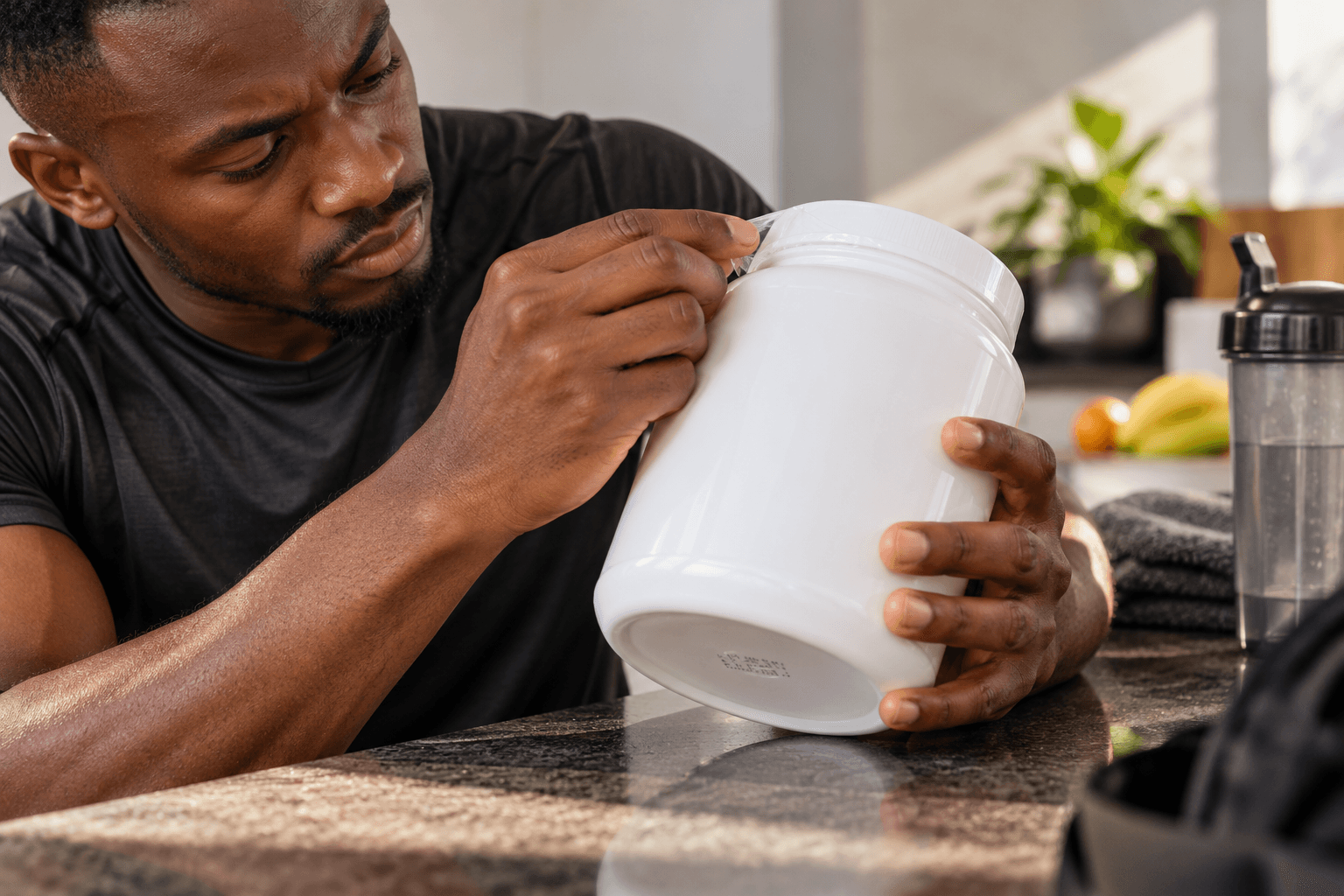
Check the serving size and servings per tub. Check the protein or the active ingredient per serving. Scan the allergens, in bold and in the "may contain" line. Find the batch number and best-before date. If you're unsure whether a tub is genuine, our guide to spotting fake supplements explains the checks.
Quick answers
- What does %RI mean on a supplement label?
- It is the percentage of the reference intake for an average adult (8,400 kJ / 2,000 kcal for energy, and set amounts for vitamins and minerals). It is a reference, not a target, and it can be over 100%.
- What does "may contain traces of" mean?
- It is a precautionary warning that the product may have come into contact with that allergen during manufacture. It is not an ingredient. If you have an allergy, read it together with the bold allergens in the ingredients list.
- Should I compare products per 100 g or per serving?
- Use per 100 g to compare different products fairly, and per serving to see what you actually take. Serving sizes differ between products, so always check both.
- What is the difference between creatine and creatine monohydrate on a label?
- Creatine monohydrate is the compound; creatine is the active part of it. On Optimum Nutrition Micronised Creatine, 3.4 g of monohydrate supplies 3.0 g of creatine per serving.
Sources
This article is general information, not medical advice. If you have a medical condition, are pregnant or breastfeeding, are under 18 or take medication, speak to your doctor before using supplements. EVΛFIT is an independent retailer and brand names belong to their owners.
Ask us on WhatsApp