Creatine · 8 min read · September 2026
Creatine 101: Everything You Need to Know
By The EVΛFIT team. Published 10 September 2026.
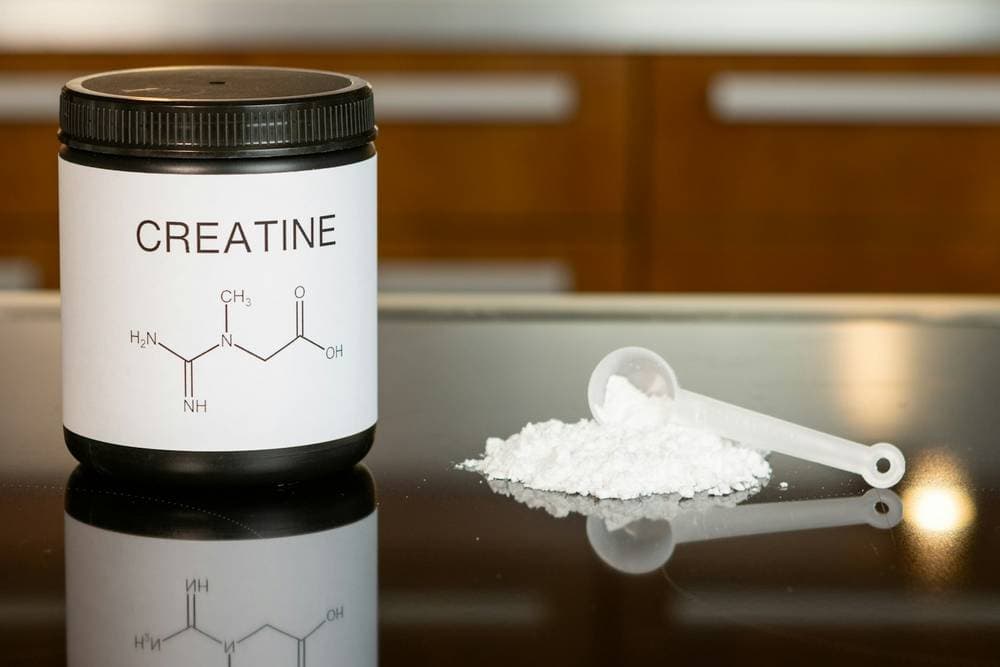
Creatine is one of the most-studied supplements in sports nutrition, and also one of the most misunderstood. It isn't a stimulant and it doesn't build muscle by itself — what it does is let your muscles regenerate their fastest energy source, ATP, a little quicker during short, hard efforts. More energy available for the last couple of reps, over months of training, is what actually drives the results people associate with it.
Your body already makes some creatine in the liver and kidneys, and gets more from red meat and fish, but at levels well below what a daily 3–5 gram dose provides. Supplementing tops up the muscle's creatine phosphate stores toward saturation, which is the whole mechanism — it's a storage tank, not a switch.
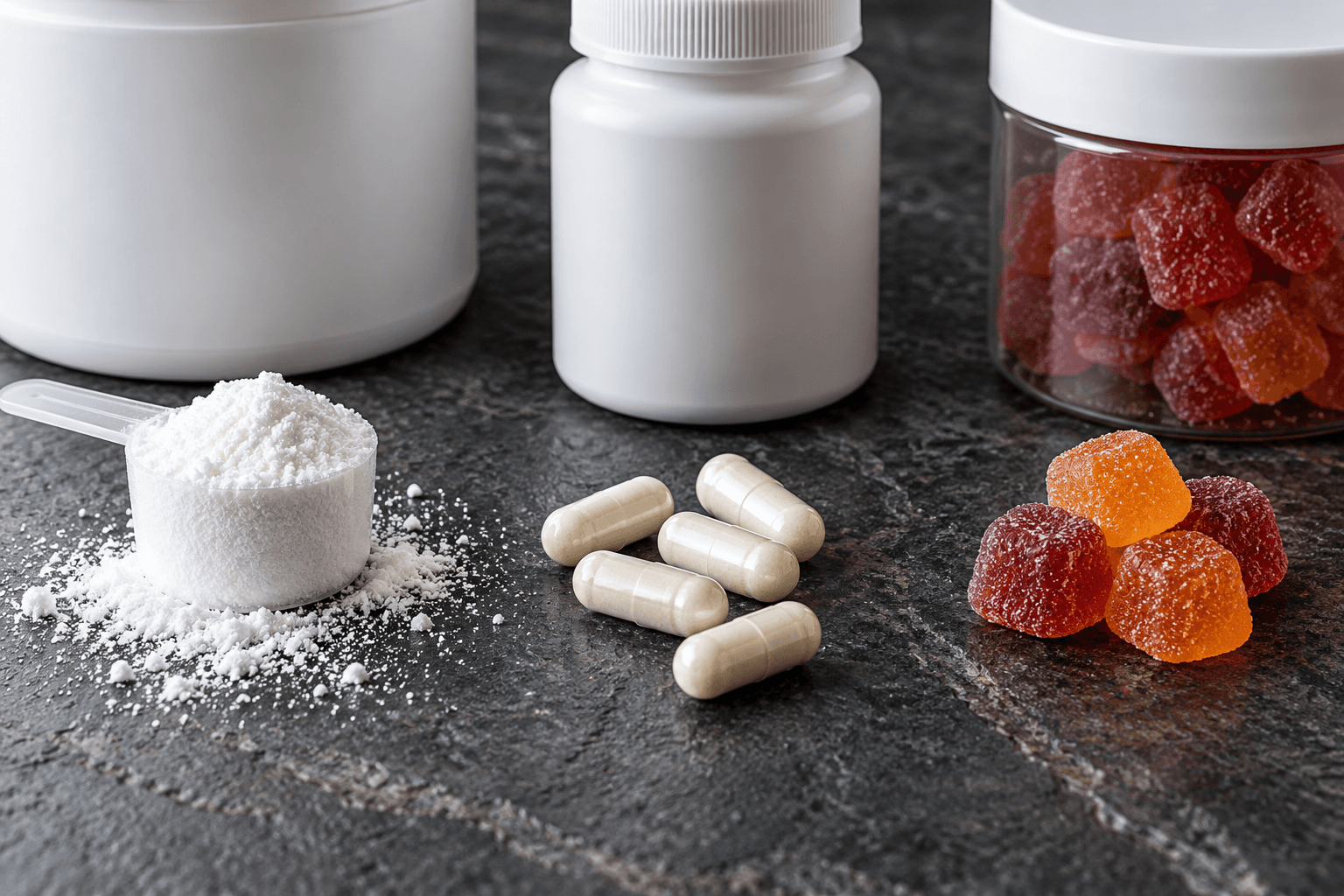
Creatine monohydrate is the form almost every serious study has been run on, and it remains the sensible default. Newer forms — HCl, buffered, micronised — are marketed on absorption or bloating claims that the evidence doesn't clearly support over monohydrate at an equivalent dose. Micronised monohydrate mixes better in water, which is a real, if minor, practical upside worth paying a little for.
You don't need a loading phase. The traditional protocol — 20g a day for a week, split into doses — saturates muscle stores faster, but a flat 3–5g daily gets you to the same saturation point within three to four weeks. Loading just trades a faster start for more stomach discomfort in most people; skipping it is the easier, equally effective route.
Timing barely matters, contrary to a lot of pre-workout marketing. Creatine works by raising your stores over time, not by being active in your blood for a single session, so taking it with a meal — whichever one you'll actually remember daily — beats optimising for before or after training.
Some water retention inside the muscle cell is normal and part of how it works — it's not the same as bloating, and for most people it settles into a stable, small weight increase (often 1–2kg) within the first couple of weeks that has nothing to do with fat gain.
It doesn't need to be cycled. Taking a break every few months was common advice a decade ago, but there's no evidence your body downregulates its own production in a way that requires it — daily, ongoing use is the simplest and best-supported approach if it's working for you.
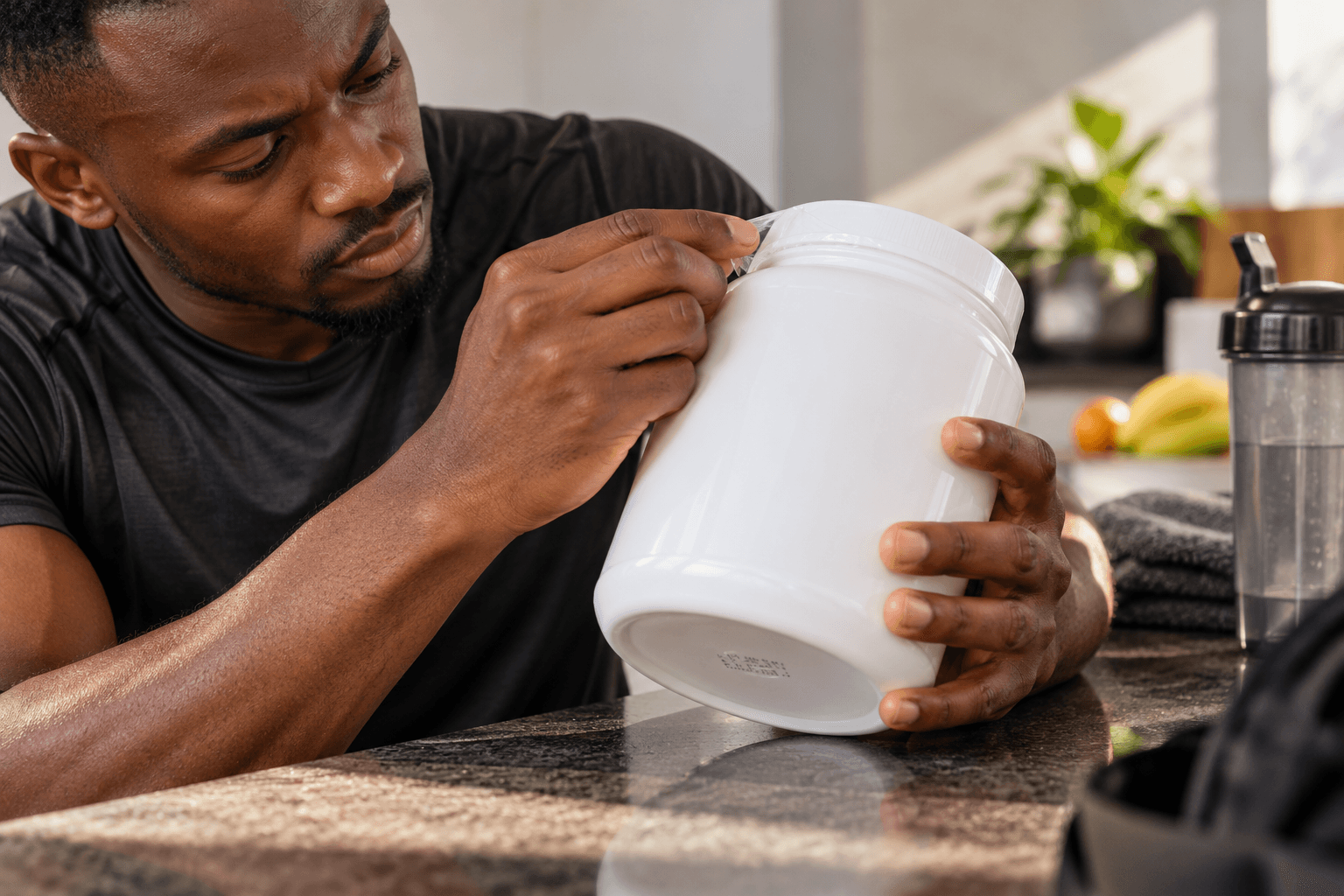
When you're buying, unflavoured micronised monohydrate at 100% creatine (no proprietary blend, no filler) is the whole checklist. Beyond that it comes down to gram-for-gram cost and whether the seal, batch code and source check out — the same authenticity questions worth asking of any supplement in Kenya.
Not sure which tub fits your training and your budget? Message us on WhatsApp and we'll point you to the right one.
This article is general information, not medical advice. If you have a medical condition, are pregnant or breastfeeding, are under 18 or take medication, speak to your doctor before using supplements. EVΛFIT is an independent retailer and brand names belong to their owners.
Ask us on WhatsApp